
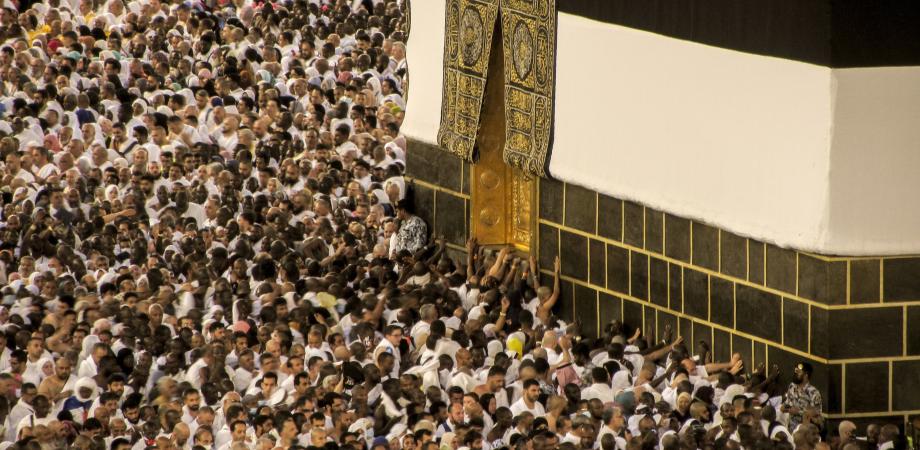
For the third consecutive year, thousands of residents in Gaza have been unable to undertake the Hajj pilgrimage, as restrictions on movement and the continued closure of key crossings have effectively blocked what is, for many, a lifelong religious aspiration. In makeshift shelter on the western edge of Gaza City, 70-year-old Mustafa Darwish reflects on yet another missed opportunity to travel to the holy sites in Mecca and Medina, despite having completed all required payments and administrative procedures.
Darwish explains that he had transferred the equivalent of around one thousand dinars through authorised pilgrimage channels in anticipation of joining this year’s group of pilgrims. Instead, he was recently informed that he would need to reclaim his funds, a development that confirmed his exclusion from the pilgrimage for a third year running. He describes a deep sense of disappointment, noting that after years marked by loss and what he characterises as a prolonged genocidal war, even moments of spiritual anticipation have been steadily eroded by the continued closure of crossings and restrictions on travel.
According to local religious authorities, more than 10,000 people in Gaza have been prevented from performing Hajj over the past three years. Around 2,473 individuals who had already been accepted for pilgrimage since 2023 remain unable to travel, including dozens who have since died while waiting. The annual quota for Gaza is typically set at 2,508 pilgrims, yet the vast majority of eligible applicants remain stranded, their plans suspended indefinitely.
Among them is 60-year-old Ma‘aniya al-Shandaghli, who stands amid the ruins of her destroyed home in northern Gaza. She recalls preparing for pilgrimage before the escalation of destruction, carefully preserving her pilgrimage garments through successive displacements in the hope that she might still be able to travel. For her, the inability to reach the holy sites or stand at Arafat represents not only a personal loss but the gradual fading of a long-held spiritual ambition, as opportunities for departure continue to recede.
As the situation persists, many residents describe a growing sense that even deeply rooted religious practices have been subsumed by the wider conditions of blockade and devastation. For those still waiting, the pilgrimage remains a deferred promise, suspended in uncertainty year after year.
Source : Safa News


