
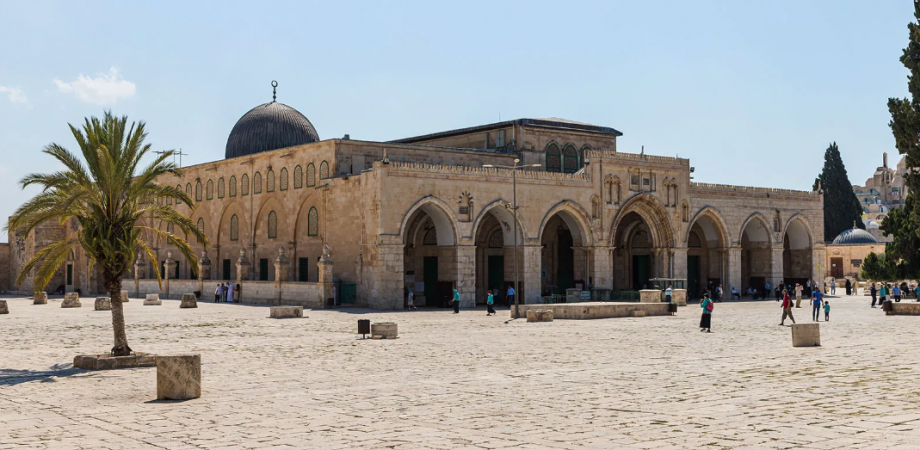
SAFA – Israeli occupation forces have significantly expanded excavation activities beneath and around the Al-Aqsa Mosque compound in occupied Jerusalem, sparking renewed concerns over the impact of the works on the city’s historical heritage and the structural integrity of nearby landmarks.
Fakhri Abu Diab, a researcher specializing in Jerusalem affairs, told Safa News Agency that excavation projects have intensified in recent months, particularly around the Umayyad Palaces, the northern entrance to Silwan, and the Wadi Hilweh neighborhood.
He said the works are being carried out under the supervision of Israeli state institutions and settler organizations that seek to promote narratives supporting Israeli claims over the city.
Abu Diab noted that the excavations are conducted without independent international oversight, while organizations such as the United Nations Educational, Scientific, and Cultural Organization (UNESCO) are prevented from monitoring or participating in archaeological assessments.
He contended that this permits archaeological discoveries to be presented and given historical interpretations by Israeli occupation forces and affiliated organizations without the need for outside scrutiny.
Abu Diab pointed to a recent Israeli announcement regarding the discovery of charred wooden beams in Wadi Hilweh, which authorities linked to the destruction of the so-called First Temple. Abu Diab said no independent body has been permitted to verify the authenticity of the findings or the historical dating attributed to them.
“Even if the artifacts themselves are genuine, there is no conclusive evidence that they belong to the period claimed by Israeli authorities or that they support the historical narrative being promoted,” he said.
Archaeology and Competing Historical Narratives
Abu Diab stressed that Jerusalem has been home to numerous civilizations over thousands of years, making it scientifically difficult to attribute archaeological remains to a single historical narrative.
He maintained that rather than offering an unbiased explanation of the city's complicated past, attributing discoveries close to southern Al-Aqsa and Silwan solely to the purported Temple serves political and ideological goals.
According to the researcher, Israeli occupation forces increasingly use archaeological projects to reinforce a particular historical narrative while marginalizing evidence from other civilizations, especially the Arab and Islamic periods that constitute a fundamental part of Jerusalem’s identity.
He said the excavation campaign extends beyond traditional archaeological work and is accompanied by broader efforts to reshape the historical and cultural landscape of occupied Jerusalem.
Tunnels and Structural Risks
Abu Diab described an extensive network of tunnels stretching from the Ain Silwan area through Wadi Hilweh toward Al-Buraq Plaza near the western side of Al-Aqsa Mosque. He said excavation activities within these tunnels have accelerated in recent years, accompanied by the construction of tourism facilities, exhibition centers, and other projects aimed at strengthening Israeli control over the area.
He warned that the continued removal of soil and rock beneath and around historic sites poses serious risks to nearby structures, including Al-Aqsa Mosque and surrounding residential buildings.
Excavation works in the area have caused cracks, ground subsidence and structural damage to homes and historic buildings, Abu Diab said. He cautioned that continued tunneling could increase the risk of further deterioration and, in some cases, partial collapse.
The researcher argued that the consequences of the excavations extend beyond physical damage, threatening Jerusalem’s broader archaeological and cultural heritage both above and below ground.
He also criticized the lack of effective international oversight despite Jerusalem’s status as a city of exceptional historical and cultural significance. According to Abu Diab, the ongoing projects selectively preserve and promote one historical narrative while diminishing or obscuring others, particularly the city’s Arab and Islamic heritage.
As excavation works continue around some of Jerusalem’s most sensitive historical and religious sites, concerns remain over their long-term impact on the city’s cultural landscape, archaeological legacy, and the preservation of one of the world’s most contested heritage sites.
Source : Safa News


