
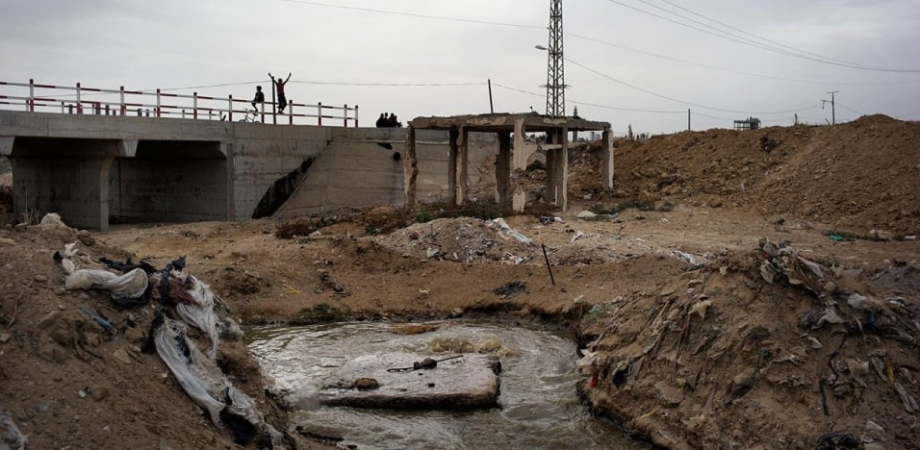
SAFA - Gaza’s seashore is no longer a safe refuge for residents of the Strip, as parts of it have turned into an open outlet for sewage water due to the destruction of infrastructure and the shutdown of treatment plants as a result of the ongoing Israeli genocide and blockade. The scene has raised growing fears of a health and environmental catastrophe threatening both the sea and the land.
With thousands of cubic meters of sewage continuing to flow directly into the sea every day, residents watch the situation helplessly as foul odors spread along the coastline and the once-pristine waters, long a final refuge for the besieged population, become increasingly polluted.
At Al-Shati refugee camp overlooking the western coast of Gaza City, resident Asaad Al-Najjar says the sea is no longer as it was before the genocide.
Speaking to Felesteen newspaper, he says, "We wake up to the smell of sewage instead of the sea breeze. We no longer allow children to go near the water, and even sitting by the sea has become difficult because of the odors and the spread of insects.”
He points out that residents understand the crisis is not new but that it has worsened unprecedentedly since the start of the genocide in October 2023, as treatment plants stopped operating and sewage networks and pumping stations suffered severe damage.
He stresses that everyone fears these polluted waters could become a permanent source of disease, especially with thousands of families living near the coastline.
The crisis is not limited to residents of coastal areas; it also affects thousands of displaced people who were forced by the genocide to set up tents on the beach after losing their homes under bombardment.
Among them is Ahmed Siam, who found no place to shelter his family except a tent he installed on the sandy shore west of Gaza City after the Israeli army destroyed his home.
Looking toward the sea, Siam told Felesteen, "We fled the bombing to the sea, but the sea itself has become polluted. We watch sewage being discharged in front of us every day, and we cannot do anything.”
He adds that children continue to play on the beach despite the risks because there is no other space available, while families fear the spread of skin and intestinal diseases, particularly amid rising temperatures and weak healthcare services.
“We live between a tent that lacks the most basic necessities of life and a polluted sea. We have no other choice. All we hope for now is for this disaster to stop,” he says.
Collapsed Sanitation System Pushes Gaza Toward Environmental Catastrophe
This reality reflects the scale of challenges facing Gaza’s water and sanitation services sector after its facilities suffered extensive damage during the genocide, including treatment plants, pumping stations, and the electricity networks needed to operate these facilities.
The continuation of the genocide and the destruction of sanitation infrastructure have created an extremely dangerous environmental and health situation, as large quantities of untreated sewage are discharged directly into the sea amid the shutdown of the central treatment plant, according to Gaza Municipality spokesperson Husni Muhanna.
Speaking to Felesteen, Muhanna explained that Gaza City currently has five main outlets along the coastline receiving water from rainwater drainage networks and sewage systems. He said that around 24,000 cubic meters of sewage and wastewater are discharged into the city’s sea every day through various outlets without any treatment due to the shutdown of the central treatment plant.
He explained that Gaza has only one central sewage treatment plant, located in the Sheikh Ajleen area southwest of the city. Although relevant authorities are carrying out maintenance and rehabilitation work, the facility has not resumed receiving and treating sewage, meaning there is currently no actual operational capacity to treat wastewater before it reaches the sea.
Muhanna added that this situation poses a severe environmental and health challengee given the extensive damage inflicted on sewage networks and facilities during the genocide. He warned that the continued flow of untreated wastewater into the sea represents a major environmental and health threat.
“These large quantities place increasing pressure on the marine environment and worsen pollution in seawater and along the shoreline, especially with the large number of citizens visiting the coast during the summer,” he said.
Infrastructure Devastation Hampers Recovery Efforts
Regarding the scale of damage to infrastructure, Muhanna explained that the genocide caused widespread destruction to sewage networks, affecting around 220,000 linear meters of pipelines, in addition to the complete or partial damage of eight pumping stations, as well as damage to the central treatment plant, leading to the disruption of large parts of the sanitation system.
The Gaza Municipality spokesperson warned that shortages of fuel, spare parts, and necessary equipment have further complicated efforts to operate the remaining facilities and carry out maintenance and repairs, as the municipality continues working under exceptional conditions and with extremely limited resources.
Muhanna warned that the collapse of the sewage system would inevitably lead to the spread of health hazards, environmental pollution, the potential leakage of wastewater into groundwater reserves, and the proliferation of mosquitoes, insects, and rodents.
Source : Safa News


