
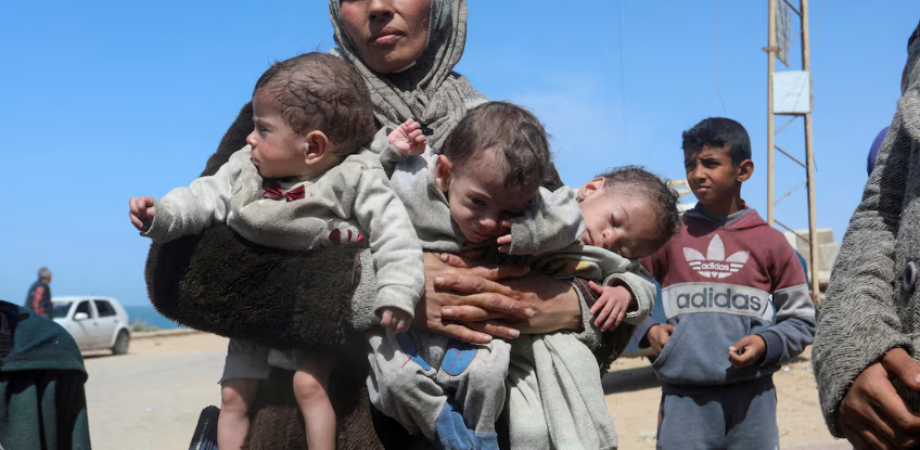
SAFA- Warnings from humanitarian officials indicate that the risk of famine in Gaza is growing, as worsening food shortages and ongoing Israeli restrictions on aid threaten to push the territory into catastrophic, famine-like conditions.
United Nations officials say that about 67 percent of the population of Gaza is food insecure, and more than 200,000 people, or one in ten residents, are at risk of famine.
The situation has raised concerns that Gaza could soon reach Phase Five on the Integrated Food Security Phase Classification (IPC) scale, the most severe category, indicating full-scale famine.
The warnings come despite a ceasefire agreement reached in October 2025, which UN agencies describe as fragile due to Israeli violations.
Humanitarian organizations say ongoing Israeli limitations on aid entry continue to undermine efforts to stabilize conditions on the ground. Justin Brady, head of the UN Office for the Coordination of Humanitarian Affairs (OCHA) in the Palestinian territories, recently warned that Gaza is facing a “food emergency” that could escalate rapidly without immediate intervention.
Humanitarian coordinator Ramesh Rajasingham has similarly noted that roughly two-thirds of the population, about 1.4 million people, remain in severe or worse levels of food insecurity.
Gaza’s Food System Near Collapse
The crisis reflects the near-total collapse of Gaza’s economy and infrastructure. Agricultural, industrial, and commercial sectors have been largely destroyed during the Israeli genocidal war, leaving residents heavily dependent on humanitarian assistance.
Many families now struggle to secure even a single daily meal.
Aid agencies report that the situation has been compounded by declining international support and operational constraints.
Several organizations have scaled back or suspended food distribution programs due to funding shortages, access restrictions, and logistical challenges. Community kitchens and charitable food centers have also reduced services or shut down entirely.
Shortages of medical supplies are further worsening the crisis. Health authorities in Gaza report that nearly half of essential medicines are unavailable, with treatments for cancer and blood disorders among the most critically affected.
Humanitarian workers describe increasingly dire living conditions, citing rising food prices, unstable market supplies, and banking restrictions that limit the flow of donations.
Vulnerable groups, including children and nursing mothers, are among those most at risk.
Aid Access Remains a Critical Concern
While political efforts to advance a second phase of the ceasefire have shown some progress, significant obstacles remain.
Disputes over implementation, particularly provisions requiring the daily entry of hundreds of aid trucks, have slowed developments.
Current aid deliveries reportedly fall well below agreed levels.
Experts warn that without a sustained and significant increase in humanitarian access, Gaza could face a renewed surge in hunger and malnutrition.
Aid agencies continue to urge the international community to ensure the consistent opening of border crossings, facilitate the safe delivery of assistance, and support efforts to restore essential services.
As conditions continue to deteriorate, officials emphasize that the crisis extends beyond food shortages, underscoring the urgent need for comprehensive humanitarian intervention to prevent further loss of life.
Source : Safa News


