
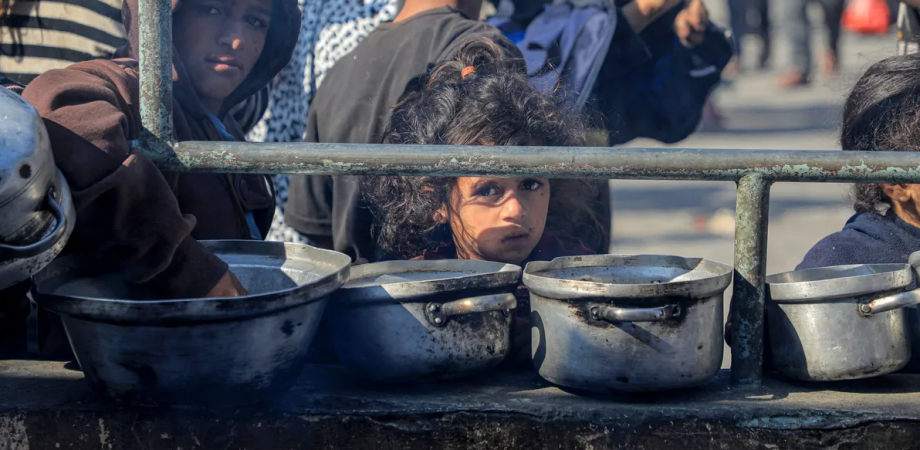
SAFA - Euro-Med Human Rights Monitor warned on Sunday that Israeli restrictions on the Gaza Strip are crippling its transportation and logistics system, obstructing the movement of food, medicine, and humanitarian aid and threatening to push the territory back toward famine.
In a statement, the Geneva-based rights group accused Israel of pursuing a systematic policy aimed at dismantling Gaza’s supply chain, from the entry of goods and humanitarian assistance through border crossings to their eventual delivery to civilians.
Euro-Med said allowing trucks to enter Gaza does not necessarily mean their cargo reaches those in need, particularly when transportation, storage, and distribution networks have been destroyed or disrupted.
Gaza’s Transport Fleet Reduced to a Fraction of Pre-War Capacity
Before the war, the territory had a fleet of some 1,200 trucks, which were used to ferry food, medicine, fuel, animal feed, construction materials, and other essential goods, according to Nahed Shuheiber, head of Gaza's Private Transport Association.
He told Euro-Med that only around 400 trucks survived Israeli attacks and destruction, while approximately 100 of those are currently out of service because spare parts, tires, oils, and batteries cannot be brought into Gaza.
That leaves only about 300 operational trucks, equivalent to roughly 25% of Gaza’s pre-war fleet, the group said.
Euro-Med said severe shortages of maintenance supplies have forced operators to dismantle damaged vehicles and use their parts to keep other trucks running.
The cost of changing the oil in a single truck has risen from around 450 shekels, or approximately $150, before the war to as much as 100,000 shekels, or about $33,000, according to the group. It said a kilogram of oil, when available, can cost around $1,100.
The rights group said the collapse of Gaza’s transport capacity is particularly dangerous because much of the territory’s infrastructure and local production capacity has been destroyed, leaving its population heavily dependent on humanitarian assistance and supplies entering from outside.
According to figures cited by Euro-Med, Israeli attacks have destroyed or disabled more than 150 trucks while they were operating, particularly along roads leading to and around the Kerem Shalom crossing.
The group said more than 20 drivers have been killed, including four since the October 2025 ceasefire, while 15 others have been detained, some for nearly two years.
Euro-Med said some of the affected drivers had been operating in convoys coordinated in advance through international and UN organizations, including the World Food Programme and the UN Office for the Coordination of Humanitarian Affairs.
It stressed that, irrespective of such coordination, international humanitarian law requires civilians, humanitarian personnel, and relief transport to be protected and humanitarian assistance to be allowed to pass rapidly and without obstruction.
Delays and Destruction Undermine Aid Delivery
The group also said the destruction of the premises and warehouses of around 150 transport companies, combined with a shortage of secure storage facilities and refrigerated warehouses, has severely weakened Gaza’s logistics network.
Delays of between 24 and 72 hours in transporting individual shipments, together with slow inspections and truck breakdowns, have resulted in quantities of frozen food, medicines, and other essential supplies spoiling before reaching civilians, it added.
Euro-Med further stated that Israeli occupation forces have repeatedly detained truck drivers at military checkpoints and inside the Kerem Shalom crossing and subjected them to degrading treatment and physical assault, despite the drivers having received prior security clearance.
The organization said another problem had emerged involving around 100 trucks recently brought into Gaza through private commercial arrangements. It said some were found to carry ownership restrictions or liens registered in favor of Israeli banks, potentially allowing their seizure at crossings.
According to Euro-Med, 23 such trucks have already been confiscated, prompting operators to stop using other vehicles out of fear they could also be seized.
The rights group said counting only the number of trucks entering Gaza provides a misleading picture of humanitarian access.
“The real measure” should be the amount of food, medicine, and other supplies that safely and consistently reaches civilians across the Gaza Strip, it said.
Food Insecurity Threatens to Deepen
Euro-Med cited warnings by Justin Brady, head of OCHA in the occupied Palestinian territory, that Gaza faces a food emergency that could deteriorate into Phase 5 of the Integrated Food Security Phase Classification if humanitarian aid declines.
According to an analysis cited in the statement, more than 1.4 million people, around 67% of Gaza’s population, are expected to face crisis-level or worse acute food insecurity between July and December 2026.
Around 212,000 people, or roughly 10% of the population, are expected to remain in Phase 4, classified as emergency, while many live near areas under Israeli occupation control where access to humanitarian assistance and essential services remains difficult.
The analysis also found that around 83% of households have no source of income. Without food assistance, an estimated 1.9 million people, approximately 90% of Gaza’s population, would face Phase 3 or worse food insecurity through December, according to the statement.
Euro-Med said these figures demonstrate that any relative improvement in food security reflects continued humanitarian assistance rather than a recovery in residents’ ability to produce or purchase food.
It warned that even limited disruptions to the entry, transportation, or distribution of assistance could rapidly reverse those gains.
Calls to Restore Gaza’s Logistics Network
The organization said Israel, as the occupying power, has obligations under the Fourth Geneva Convention to ensure supplies of food and medical necessities when local resources are inadequate and to facilitate humanitarian relief.
Euro-Med accused Israel of violating those obligations by destroying Gaza’s logistical capacity while restricting the repair or replacement of trucks and other essential equipment.
The group argued that the destruction and obstruction of systems needed to transport food and medicine form part of the ongoing genocide against Palestinians in Gaza.
It also said the deliberate starvation of civilians is prohibited under international humanitarian law and that intentionally depriving civilians of objects indispensable to their survival, including by deliberately obstructing relief supplies, may constitute a war crime under the Rome Statute of the International Criminal Court.
Euro-Med called on the international community to take “immediate and binding” measures to end Israel’s blockade, ensure unrestricted movement of humanitarian and commercial supplies, and restore Palestinians’ access to food, water, medicine, and livelihoods.
It urged states to impose an arms embargo on weapons, military equipment, and services that could be used to maintain the blockade or obstruct humanitarian assistance, as well as targeted sanctions against officials responsible for alleged violations.
The organization called on Israeli forces to immediately lift restrictions on the entry of new trucks, spare parts, tires, oils, batteries, fuel, and maintenance equipment and to allow humanitarian and private-sector operators to bring in a transport fleet sufficient to meet Gaza’s needs.
It also demanded the opening of all land crossings to regular humanitarian and commercial traffic, clear operating schedules, an end to arbitrary inspection procedures, and the publication of daily information on trucks, cargo, and whether shipments reach their intended destinations.
Euro-Med called for an immediate end to attacks on drivers and trucks, safe and permanent transport routes, and disclosure of the whereabouts and legal status of detained drivers.
It further urged the United Nations and donor countries to finance an emergency plan to rebuild Gaza’s logistics capacity, including purchasing or leasing replacement trucks, establishing mobile maintenance centers, providing temporary and refrigerated storage facilities, and maintaining reserves of spare parts and operating supplies.
The group also proposed establishing an independent UN mechanism to monitor trucks from the moment they enter Gaza until their cargo reaches civilians and to document delays, refusals, attacks, and confiscations.
Euro-Med urged the International Criminal Court to accelerate investigations into alleged international crimes committed in Gaza and pursue additional arrest warrants where sufficient grounds exist.
The organization concluded that humanitarian relief should be measured by what actually reaches Gaza’s population rather than simply by the number of trucks permitted to cross into the territory.
Food stranded at crossings or spoiled before reaching hungry civilians “does not alleviate hunger and cannot be counted as aid,” Euro-Med said.
Source : Safa News


