
SAFA — Palestinian authorities have warned of a deepening sewage crisis in Gaza, with tens of thousands of cubic meters of untreated wastewater being discharged into the sea or seeping into the surrounding environment each day.
The crisis is worsening amid the Israeli blockade, which restricts the entry of fuel and essential equipment needed to operate and maintain Gaza’s sewage system.
The Palestinian Water Authority said Wednesday that about 55,000 cubic meters of untreated sewage are discharged daily.
Of that amount, roughly 40,000 cubic meters are pumped directly into the sea, while another 15,000 cubic meters seep into the environment and groundwater through cesspits and leaks.
The authority said all five of Gaza’s main wastewater treatment plants are out of service, reducing the territory’s daily sewage treatment capacity from about 185,000 cubic meters to virtually zero.
The proportion of Gaza’s population with access to sewage networks has also fallen from 85% to about 45%, the authority said.
Only 18 of the territory’s 74 sewage pumping stations are partially operational, increasing the risk of flooding and sewage leaks into residential areas and the surrounding environment.
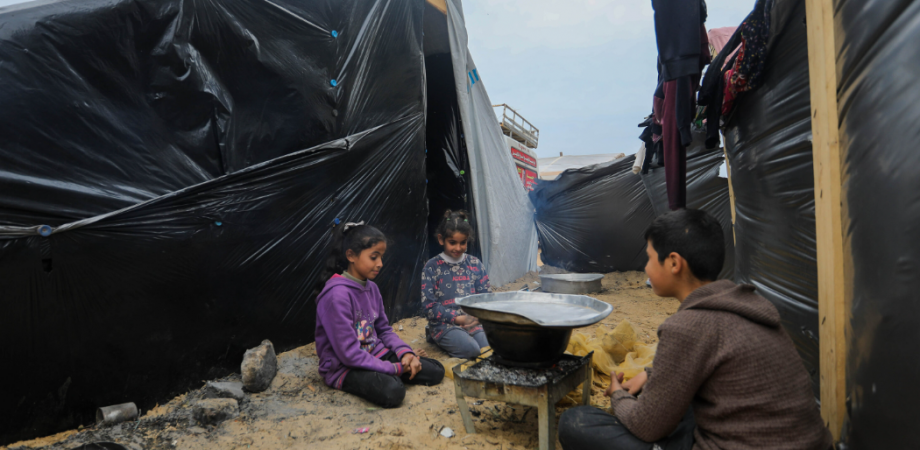
The collapse of the sewage system has had a direct impact on displaced Palestinians living along Gaza’s coast.
Omar Abu Hammad, a displaced Palestinian from Bani Suheila, said thousands of people sheltering near the beach in Khan Younis are surrounded day and night by the smell of sewage flowing into the sea.
“We are not living at all here, and we don’t feel anything like life,” Abu Hammad said, describing the conditions faced by displaced families.
Residents said the smell of sewage has become part of their daily lives, replacing the sea breeze.
Flies and mosquitoes have spread throughout the area, while nighttime brings additional hardship as families struggle to sleep or sit outside their tents with their children.
Salem Qashta, a displaced Palestinian from Rafah, said his tent is about 50 meters from a sewage discharge point, making the area unsuitable for living.
He said flies and mosquitoes have become widespread and the foul smell is constant. Qashta said he prevents his children from approaching the sea because he fears their exposure to disease and contamination.
According to residents, sewage is repeatedly pumped into the sea at night, forcing displaced families to use makeshift methods to reduce the smell inside their tents.
Abu Hammad said the sea’s color has changed from blue to black because of the wastewater, while the growing presence of insects and foul odors has turned the coastline, where Palestinians sought refuge, into another source of danger.
The Palestinian Water Authority said its teams, working with partners, have carried out emergency interventions and repairs at about 900 critical points while assessing damage to roughly 385 kilometers of sewage networks.
Current efforts are focused on restoring operations at the Sheikh Ajleen and Sheikh Radwan wastewater treatment plants, with support from the International Committee of the Red Cross and UNICEF.
The authority said addressing the crisis requires the urgent provision of fuel, generators, pumps, spare parts and heavy equipment needed for repairs, as well as safe access for technical and field teams.
It warned that the continued collapse of Gaza’s sewage system could further deepen public health and environmental risks, particularly as large quantities of untreated wastewater continue to flow into the sea and seep into groundwater.
The sewage crisis adds another layer to Gaza’s humanitarian emergency, where widespread damage to basic infrastructure and restrictions imposed under the Israeli blockade have severely reduced Palestinians’ access to essential water and sanitation services amid the ongoing Israeli genocide.
Source : Safa News


