
SAFA — Economic, cultural and sporting measures targeting Israel are expanding across Europe, as restrictions on goods from Israeli settlements increase and boycott campaigns gain greater prominence across the continent.
The Israeli daily Haaretz reported Monday that the trend has intensified amid growing criticism of Israel over its ongoing war in Gaza and its policies toward Palestinians.
Journalist Jonathan Lis reported that a growing number of European initiatives are specifically targeting goods and activities linked to Israeli settlements, reflecting mounting opposition across Europe to Israeli policies in Gaza and the occupied West Bank.
Trade Measures Led by the Netherlands
The Netherlands has emerged as one of the most active countries, imposing restrictions on products originating from Israeli settlements.
Dutch supermarkets have removed such goods from their shelves, Haaretz reported, a move with direct consequences for Israeli exporters linked to settlement production.
According to the analysis, 11 other European countries are considering or preparing similar measures that could further restrict the import and sale of goods produced in Israeli settlements.
If adopted, the measures would significantly expand economic pressure on settlement-linked industries beyond the Dutch market.
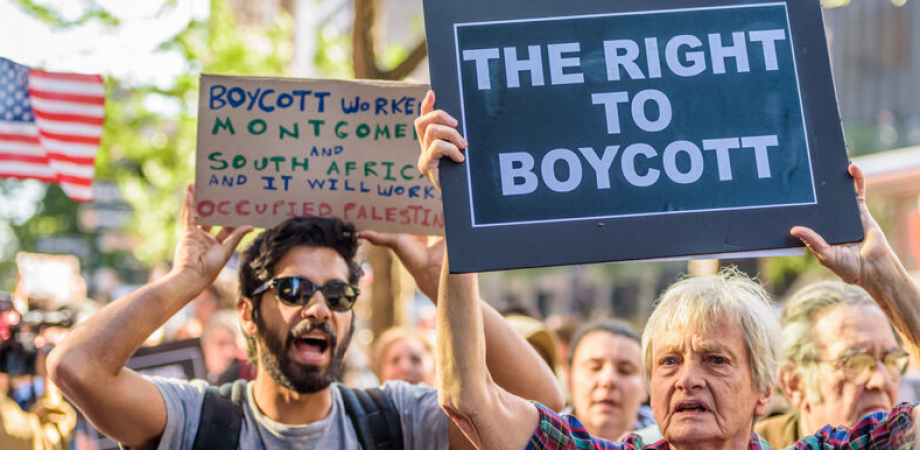
The trade measures are unfolding alongside broader campaigns led by civil society organizations, businesses and individual consumers seeking to distance themselves from Israeli products, institutions and events.
Cultural and Sporting Boycotts Expand
The pressure is not confined to trade. Cultural and sporting actions targeting Israel have become increasingly prominent, bringing opposition to Israeli policies into arenas that have traditionally remained more distant from foreign policy disputes.
Ireland has been among the most visible examples on the sporting front. Before Sunday’s UEFA Nations League match against Israel, Irish players refused to take part in the traditional pre-match handshake with their Israeli counterparts and did not participate in the customary exchange of pennants between the team captains.
The match, played in Debrecen, Hungary, ended in a 3–0 victory for Ireland. Haaretz reported that the game was held before a limited crowd and that the usual pre-match ceremonies were omitted, highlighting how opposition to Israel’s actions has increasingly reached high-profile international sporting events.
Calls for cultural and academic boycotts have also spread across Europe, with campaigners urging festivals, institutions and artists to cut ties with Israeli state-linked bodies or oppose Israeli participation in events.
Targeting Settlements vs. Targeting Israel
The European measures vary considerably in scope and legal force. Some focus specifically on goods produced in Israeli settlements in territories occupied since 1967, including the West Bank and East Jerusalem.
Others are broader, encompassing cultural organizations, sports teams and institutions associated with the Israeli state.
The distinction is significant because many European governments continue to maintain diplomatic and trade relations with Israel while opposing Israeli settlement activity in the occupied Palestinian territories.
In the Netherlands, for example, the measures cited by Haaretz focus on products originating from Israeli settlements rather than imposing a comprehensive boycott of Israeli goods.
Elsewhere, however, pressure is being driven less by government policy and more by grassroots campaigns calling for broader boycotts, divestment and sanctions against Israel.
A Growing Trend Across Europe
According to Haaretz, although many of the measures remain fragmented and are being implemented separately across different countries and sectors, their cumulative impact could become increasingly difficult to reverse.
As trade restrictions, cultural exclusions and sporting protests multiply, they point to growing pressure within parts of Europe to distance institutions and businesses from Israel over its policies toward Palestinians.
The measures are expanding against the backdrop of sustained international criticism of Israel’s ongoing war in Gaza and its policies in the occupied West Bank, including continued settlement expansion.
Human rights organizations and UN bodies have repeatedly raised concerns over Palestinian civilian deaths, widespread destruction in Gaza and the continued expansion of Israeli settlements in the occupied West Bank.
For Israel, the growing array of European measures represents a challenge extending beyond formal government sanctions and diplomatic criticism. The pressure is increasingly reaching consumer markets, cultural institutions and international sporting events, areas that can shape public perceptions and carry considerable symbolic weight.
While the individual measures differ in their legal status, scope and objectives, their spread across multiple European countries points to a broader reassessment of economic, cultural and institutional ties with Israel amid growing opposition to settlement expansion and the ongoing war in Gaza.
Source : Safa News


