
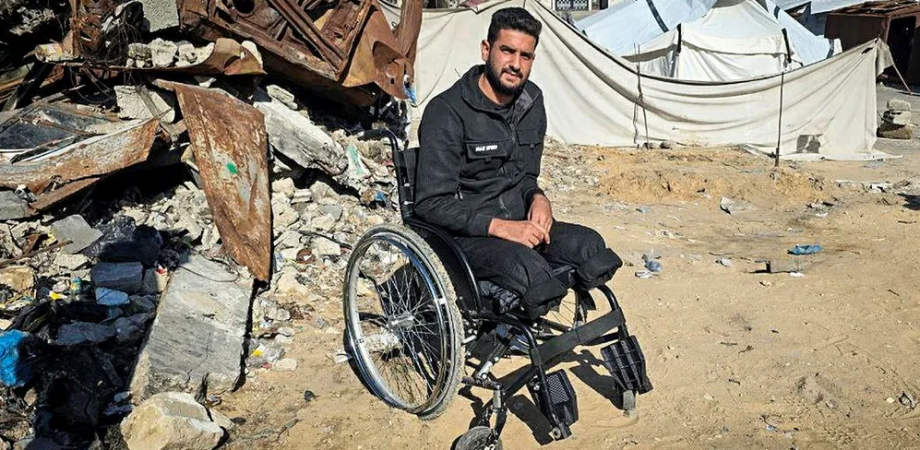
In a place where the genocidal war has hollowed out entire neighbourhoods and tightened the margins of survival, a young performer has managed to hold on to the only thing the devastation could not take from him: his voice. Abdullah Nattat, once known for bringing music to weddings and public celebrations, now sings from a wheelchair, carrying with him a message shaped by loss yet anchored in resolve. He speaks with a quiet determination, insisting that while the war may have taken his legs, it could not extinguish the meaning he finds in art.
Before the devastation collapsed the stages on which he once stood, Abdullah travelled across the region to perform, offering moments of joy to communities now living under the shadow of destruction. When the genocidal war erased livelihoods overnight, he and his team saw their craft transformed. Music was no longer entertainment; it became an act of care for children who had seen their lives shattered. They moved from one shelter to another, from makeshift classrooms to overcrowded camps, offering songs and small pockets of comfort to those who had lost homes, parents, or the fragile routines that once counted as normal life.
The turning point for Abdullah came one afternoon when an airstrike tore through the area where he happened to be running a simple errand. What followed was a blur he prefers not to relive in detail, marked by the realisation that he would no longer stand or walk. Yet even in hospital, between pain and uncertainty, the thought of the children he once performed for held on to him. Their messages reached him from across camps and shelters, reminding him of the laughter he had fought to protect. It was their voices, he says, that drew him back to the microphone, convincing him that his role had not ended but merely changed shape. Today, he continues to perform, determined to plant fragments of childhood back into young hearts in a city fighting to remain alive.
Source : Safa News