
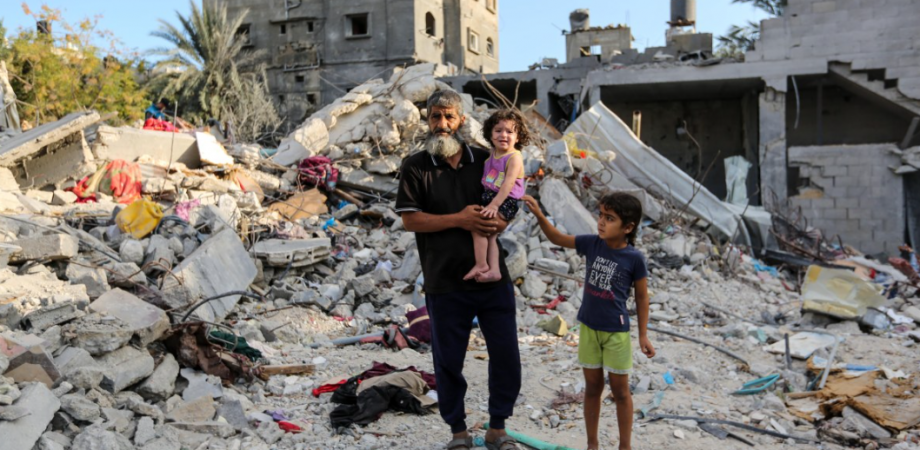
In a shattered corner of Gaza, a wounded father kneels in the dust, digging through layers of broken concrete with his bare hands. Nearly two years after a genocidal war erased his home, Mahmoud Hammad continues his solitary search for the bodies of his wife and six children, convinced they remain trapped beneath the rubble. Injured in the same strike that wiped out his family, he says stopping is not an option until he can bring them out and lay them to rest.
Before the genocidal war reached its most devastating phase, Gaza’s families already lived with fragility and loss. What followed turned that fragility into catastrophe. Hammad survived the destruction of his home but lost almost everyone else. After months of recovery from his wounds, he returned to the ruins, driven not by hope but by duty. He digs deeper each day, enduring pain and exhaustion, knowing that formal rescue teams and heavy machinery are largely absent.
The practical obstacles are overwhelming. Hiring equipment and labour is far beyond his means, forcing him to abandon machines and rely solely on his hands. Water has begun seeping into the pit he has carved, yet he presses on. Recently, he managed to recover and properly bury his eldest son, whose body had been thrown clear of the house by the blast. That small act of dignity has only strengthened his resolve to reach the rest of his family.
Across Gaza, Hammad’s story is not unique. Thousands are believed to remain buried beneath destroyed neighbourhoods, their families waiting in limbo. Restrictions on the entry of machinery have slowed recovery to a crawl, leaving survivors to confront unimaginable grief alone. In the silence of the ruins, the search for the dead has become another cruel chapter of a genocidal war that continues to claim lives even after the bombs have fallen.
Source : Safa News


