
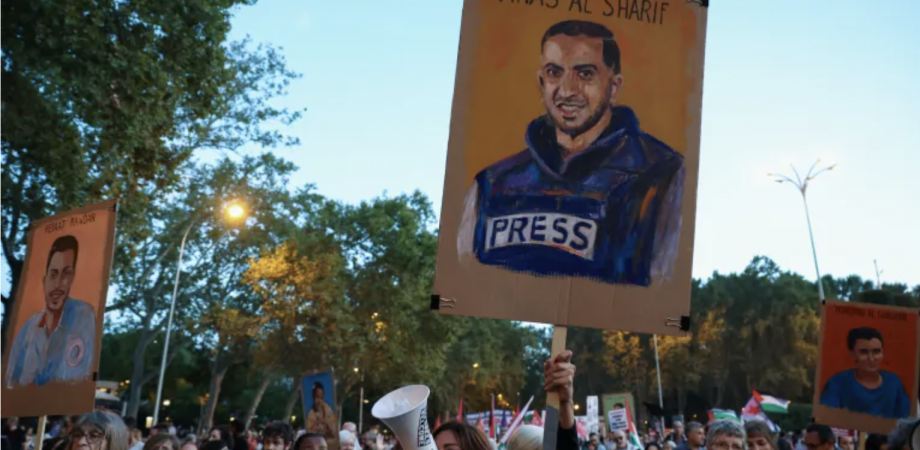
In 2025, Gaza stood apart for one grim reason: no place claimed more journalists’ lives. Amid a continuing genocidal war, reporters attempting to document daily realities paid an extraordinary price, with deaths concentrated overwhelmingly inside the Strip. Most of those killed were local journalists, working without protection, resources or any expectation that those responsible for their deaths would ever be held to account. The absence of accountability has fostered an environment in which targeting the press appears not only tolerated, but routine.
Several killings followed a disturbing pattern. A tent used by journalists near Al-Shifa Hospital was bombed, killing Anas Al-Sharif. Others were struck while reporting or moving between locations, including journalists working for Al Jazeera such as Hamza Al-Dahdouh, Ismail Al-Ghoul, Rami Al-Rafiei and Hussam Shabbat. Drones have become a defining feature of this violence, with journalists increasingly killed from the air while carrying out clearly identifiable media work.
Hospitals, traditionally places of refuge, have also turned deadly. At Nasser Hospital, an attack killed dozens, among them journalists and medical staff. Beyond those killed, many reporters have been detained, abused, or held for months without charge, further shrinking the space for independent reporting. Together, killings, arrests and intimidation have transformed Gaza into an environment where journalism itself has become life-threatening.
Compared with other dangerous regions, from Eastern Europe to Latin America and Southeast Asia, Gaza now stands as the most perilous place on earth for media workers. The pattern that emerges is not accidental loss amid chaos, but repeated targeting carried out with near-total impunity. For journalists on the ground, telling the story has become an act of extreme personal risk, carried out under the constant shadow of death.
Source : Safa News


