
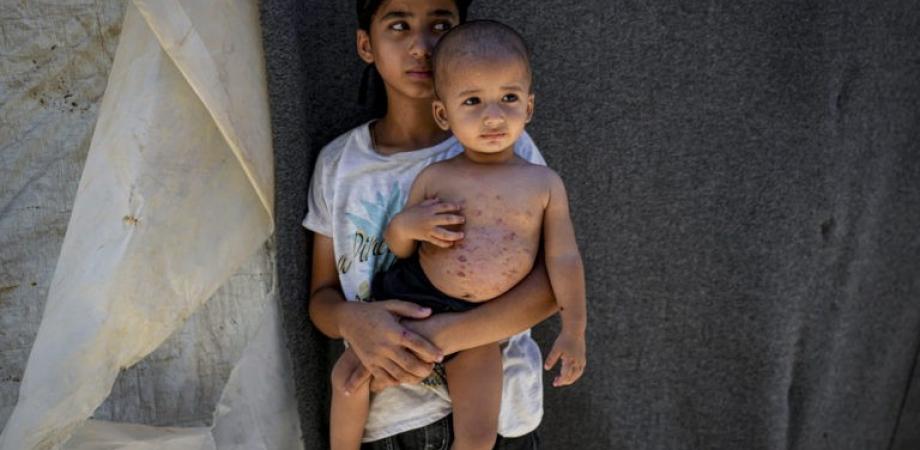
As temperatures rise across Gaza, families displaced by the ongoing genocidal war are confronting another layer of suffering inside overcrowded tent camps scattered across the south of the territory. In areas such as Al-Mawasi near Khan Younis, makeshift shelters have become overwhelmed by mosquitoes, fleas and cockroaches thriving among untreated sewage, uncollected rubbish and collapsing sanitation systems. Residents say the heat has turned fragile tents into suffocating spaces where sleep is nearly impossible.
Parents describe nights dominated by children crying from painful insect bites and severe itching. Many families sleep directly on sand-covered ground with only thin blankets separating them from flea infestations. With medicine, insect repellent and basic hygiene products now difficult to obtain, even minor skin infections are becoming increasingly dangerous. Several displaced residents said the beginning of summer already feels unbearable, while fears are mounting over what conditions could become during the peak heat expected later in the season.
Older people and children appear particularly vulnerable. One displaced grandfather from northern Gaza said families are forced to keep tent openings uncovered to allow air inside, despite knowing that insects immediately flood in after sunset. Around many camps, stagnant wastewater has gathered close to shelters, creating ideal breeding grounds for pests. Residents say exhaustion has become constant, with nights spent trying to keep insects away followed by long hours searching for water under extreme heat.
The psychological strain is also deepening. Students and parents living in the camps describe waking repeatedly during the night in panic as insects crawl across mattresses, clothes and food supplies. Families already traumatised by displacement and repeated bombardment now face worsening fears over illness spreading through overcrowded encampments. Doctors working in temporary clinics have reportedly linked increasing cases of fever, rashes and skin infections to deteriorating environmental conditions surrounding the camps.
Local authorities and humanitarian organisations continue to warn that Gaza is moving towards a major public health catastrophe. Waste collection systems and sewage networks have largely collapsed after months of destruction caused by the genocidal war, leaving huge quantities of rubbish and contaminated water exposed near densely populated displacement areas. Medical workers fear that soaring temperatures, insect infestations and weakened healthcare services could accelerate the spread of infectious diseases during the summer months.
Source : Safa News


