
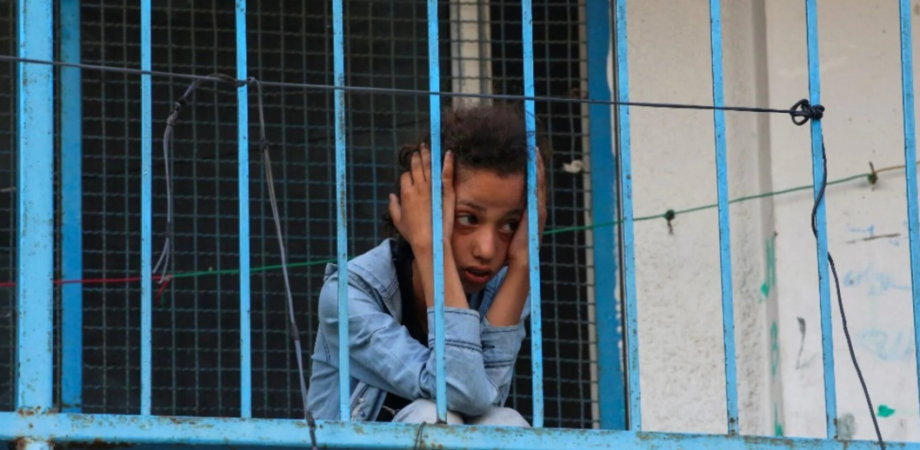
SAFA — Gaza's Ministry of Education and Higher Education said the ongoing Israeli genocide has caused unprecedented devastation to the territory's education sector, warning of severe and worsening learning loss among students.
In a report released Thursday covering the period from 2023 to 2026, the ministry said the impact of the Israeli genocide extends far beyond temporary school closures, describing it as a systemic crisis affecting school infrastructure, educators, students, and the continuity of the entire education system.
"The Israeli genocide has imposed a new reality on the education sector," the report said, citing widespread destruction, mass displacement, and prolonged instability that have drastically reduced schools' operational capacity while placing enormous pressure on teachers and students.
According to the report, extensive damage to school buildings and administrative facilities has rendered many schools unusable, while others have lost essential resources, including furniture, equipment, and technological infrastructure, complicating efforts to resume formal education.
The ministry said the prolonged suspension of regular schooling, the conversion of many schools into displacement shelters, and repeated disruptions to online learning have significantly widened learning gaps, particularly among younger students in the foundational stages of education.
It also reported a sharp decline in essential support services, including psychological counseling, special education, and vocational training, alongside the near-collapse of early childhood education, leaving already vulnerable children at even greater risk.
The report highlighted the cumulative psychological and behavioral toll of the genocide on both students and teachers, stressing that recovery will require comprehensive psychosocial support in addition to rebuilding schools and restoring the learning environment.
The ministry said it has implemented emergency measures in coordination with its partners, including establishing temporary learning spaces and field schools, and distributing educational materials to preserve a minimum level of educational continuity.
However, it emphasized that these emergency measures are only temporary and cannot replace a safe, inclusive, and sustainable education system.
The report called for a transition from emergency response to long-term recovery and reconstruction, urging the adoption of a comprehensive plan to restore access to education and provide students with a stable learning environment.
Source : Safa News


