
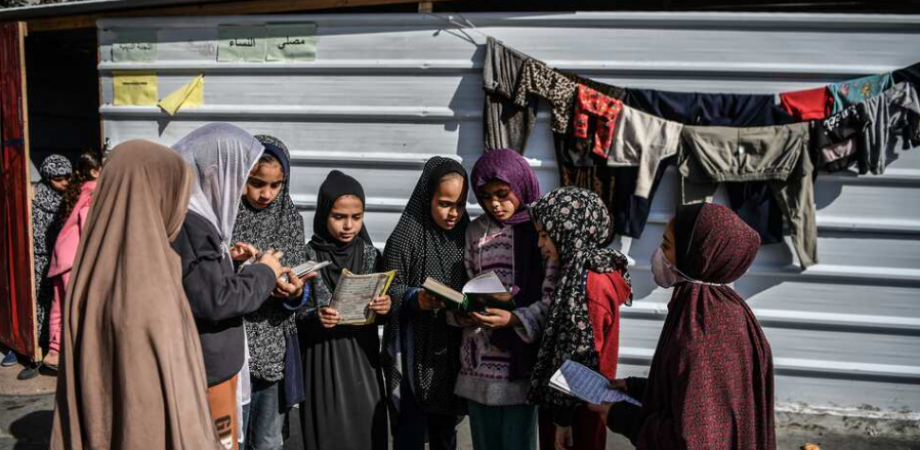
SAFA - A Palestinian education expert has stressed that the urgent resumption of in-person schooling across the Gaza Strip is essential to address severe learning loss and help restore the psychological and social well-being of students after months of disruption caused by the Israeli genocide.
Hisham Ghrab, a professor of mental health, told Safa News Agency that prolonged absence from classrooms and reliance on alternative learning methods have created deep and cumulative educational gaps that will become increasingly difficult to overcome.
He said face-to-face education is not limited to academic instruction but also provides the interactive environment children and young people need to develop social, behavioral, and communication skills.
Ghrab warned that extended school closures have contributed to rising levels of anxiety, isolation, and other psychological challenges among students as a result of losing daily routines and direct interaction with classmates and teachers. He described the return to classrooms as a pivotal step toward rebuilding students’ mental well-being by providing a safe environment that can ease accumulated psychological pressures.
He called for coordinated efforts by educational institutions and relevant authorities to facilitate a comprehensive and safe return to schools, allowing the education system to resume its central role in supporting children and contributing to community recovery.
Devastated Education System
The expert’s remarks come as Gaza’s education sector continues to face unprecedented devastation resulting from the Israeli genocide. According to UN agencies and human rights organizations, more than 90% of school and university buildings across the territory have been destroyed or damaged.
The widespread destruction has deprived approximately 800,000 students of their fundamental right to education. Most of the remaining school buildings have been converted into overcrowded shelters housing thousands of displaced families, leaving the formal education system largely unable to function.
The crisis has also devastated the education workforce. Official figures indicate that thousands of students and more than 800 teachers and education staff have been killed, alongside dozens of academics, researchers, and university scholars.
These losses have severely weakened educational institutions while leaving both students and surviving staff coping with profound psychological trauma.
Emergency Learning Initiatives
Amid the collapse of the education system and extensive damage to electricity and telecommunications infrastructure, emergency alternatives have emerged, including tent schools and community-based learning initiatives inside displacement shelters and residential areas.
Education specialists say these emergency efforts have played an important role in maintaining access to learning under extraordinary circumstances. However, they emphasize that such temporary measures cannot replace structured classroom education or fully compensate for the extensive learning loss and the comprehensive educational and psychosocial environment that schools provide.
Source : Safa News


