
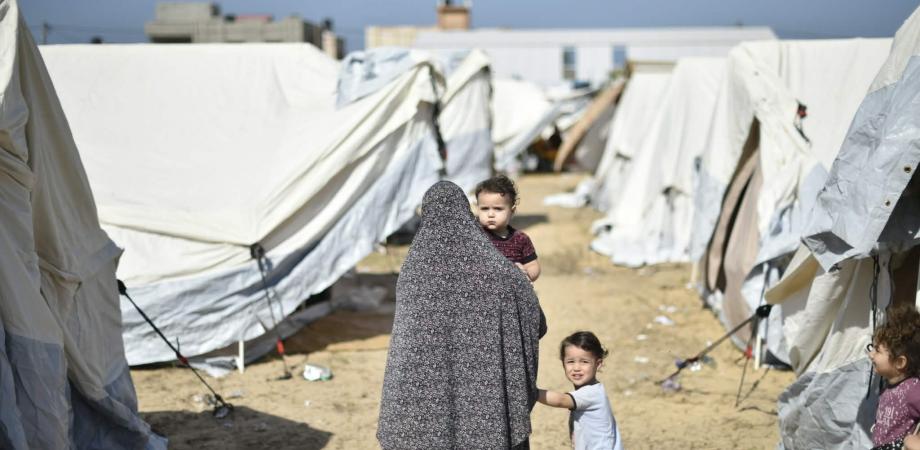
What has unfolded across Gaza is not only the destruction of streets and buildings, but the deliberate unravelling of everyday life itself. Entire neighbourhoods once shaped by extended families living floor by floor, generation after generation, have been erased in a genocidal war that hollowed out the social architecture of the Strip. Homes that embodied kinship, shared labour and collective memory collapsed together, taking with them the fragile networks that sustained communities long before the latest devastation. What remains is not simply rubble, but the absence of continuity, a place where the rhythms of ordinary life have been forcibly severed.
Children, who form the backbone of Gaza’s population, have borne the heaviest weight of this genocide. Education, play and healthcare, the pillars of childhood, were stripped away as schools, clinics and homes were destroyed or repurposed as overcrowded shelters. Displacement became routine, loss constant. A generation has been pushed into premature adulthood, carrying grief, responsibility and uncertainty in place of safety or aspiration. Daily survival replaced learning, while the search for food and water came with humiliation and fear. Childhood possessions vanished, and with them the sense of stability that allows a future to be imagined.
The genocidal war also struck at Gaza’s intellectual and cultural life. Academics, teachers and professionals were killed or displaced, universities silenced, and libraries reduced to ashes. Cultural inheritance, manuscripts, theses, family archives and oral histories, was wiped away alongside the elderly who carried it. Historic sites such as the Great Omari Mosque and the Church of Saint Porphyrius were damaged, underscoring that neither faith nor history offered protection. In the absence of fuel, books themselves were burned for warmth, a grim symbol of knowledge sacrificed to endure another night.
Beyond human loss, the land itself has been pushed towards collapse. Agriculture that once fed families and sustained livelihoods was flattened, animals left to starve, and soil and water poisoned by waste and debris. Markets turned into dumping grounds, the sea polluted by untreated sewage, and fishing reduced to a hazardous gamble. Even the dead were denied dignity, as cemeteries were disturbed and remains mishandled, reinforcing the sense that no boundary, living or dead, was respected. Step by step, the Strip was reduced to a place where survival is provisional and restoration deliberately obstructed.
Source : Safa News


