
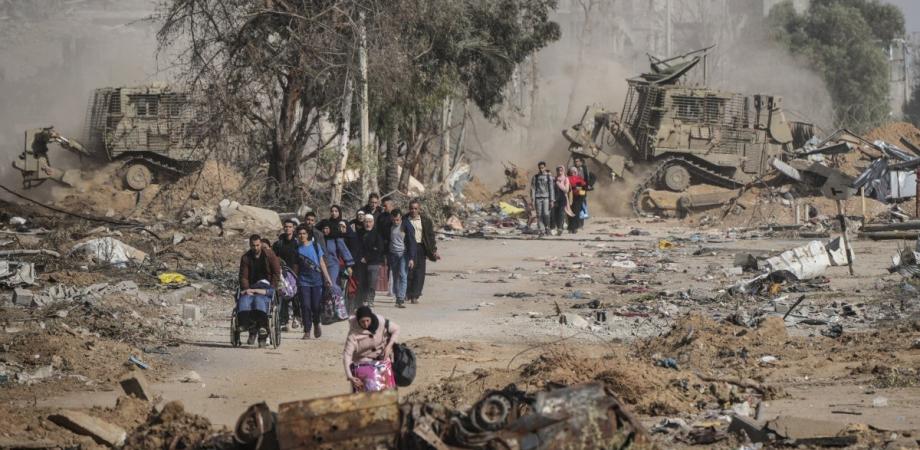
More than four months after a ceasefire was announced in Gaza, daily life across the territory continues to unfold under conditions that suggest little meaningful change on the ground. A newly released report by a Palestinian human rights organisation argues that what was presented as a pause has instead allowed the genocidal war to continue in less visible ways. According to the document, civilians remain exposed to sporadic shelling, gunfire and renewed displacement orders, while vast sections of the population continue to live amid severe humanitarian deprivation.
The report states that since the ceasefire declaration in October 2025, roughly 600 Palestinians have been killed in Gaza, among them more than 160 children, while over 1,500 others have sustained injuries in shootings and bombardments. Residential areas have also faced further demolitions, and evacuation instructions have reportedly forced families to move yet again in several parts of the enclave. For many residents, the ceasefire has brought little sense of safety, as the wider conditions of the genocidal war remain firmly in place.
Healthcare services in Gaza are described as functioning at only a fraction of their former capacity. Hospitals face acute shortages of medicines, equipment and specialist staff, leaving many patients without life-saving treatment. The report notes that since July 2024, at least 1,268 people have died while waiting for permission to leave the territory for urgent medical care. Thousands more remain in desperate need of treatment abroad, including an estimated 4,000 cancer patients whose conditions continue to worsen.
Meanwhile, hundreds of thousands of families are still sheltering in makeshift tents or heavily damaged buildings, with reconstruction yet to begin on any meaningful scale. Restrictions on the entry of construction materials and humanitarian supplies have stalled rebuilding efforts, leaving communities exposed to harsh living conditions. Aid organisations already stretched thin are also facing mounting pressure, while attacks on humanitarian workers have further weakened fragile support systems. Rights advocates argue that meaningful international intervention is urgently required to ensure unrestricted humanitarian access, enable medical evacuations and pursue accountability for violations linked to the ongoing genocidal war.
Source : Safa News


